Wednesday, 2 December 2015

Changing perceptions: Best Western.

The image below illustrates the perceptual process as discussed by Caitlin Connors 2012 this blog post will briefly explain each stage of the process using information from Connors (2012). To end the post we will discuss how Best Western wish to change how people see them as a budget hotel and how they may do this.
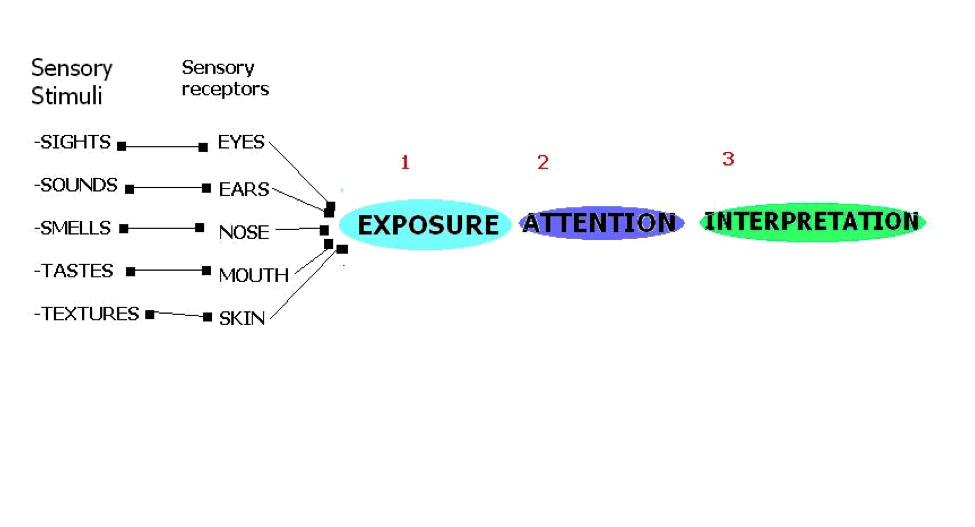

Exposure is the first stage and to put it simply is when one of the consumers stimulus is exposed to a companies product. On the other hand, due to consumers having sensory thresholds they may not actually take notice to the particular brand or product. 

Attention is the second stage of the process and many could argue the most difficult to achieve due to the amount of information in the marketplace. In order to achieve this stage companies must stand out from others similar to them, one way to do this is by using experiential marketing (which was explained in my previous post).  

Interpretation according to Connors (2012) is the third stage of the process, and basically means how a consumer will interpret the information they have available to them. In relation to interpretation their are two important factors; what expectations the consumer already had and what they think about the information once they see or receive it. 

All of these factors are important in generating a response from the consumers for particular products or brands.


What changes have Best Western made? 
  1. By 2016 they will launch a new logo, using the same colours yet a complete change in terms of design.
  2. In addition to the logo changes, they also plan to launch many new five star hotels.
  3. Focusing on the experience the consumers will have during their time at Best Western.
Will consumers notice the difference?
  1. The change will be noticeable and Best Western hope that they will generate more interest from the up market consumers, and change their perception totally. It could be argued that Best Western hope to change perceptions by using the differential threshold approach.


What do Best Western hope to achieve with these changes? 
  1. Best Western want to change how they are perceived as a budget hotel chain. 
  2. The new campaign starting in 2016 will aim remove any negative opinions.
  3. To modernise and improve the image of their brand.

To conclude, there are three main elements which are important to brands and generating interest and responses for their products. Should a company, Best Western being just one example of many, are not happy with how they are perceived they can make unnoticeable or noticeable changes to their brand to change their perceptions. 


Monday, 2 November 2015

Experiential Marketing VS Traditional Marketing.


Since its my first post I would like to say: click the links for sources and more information. 

For this post I will introduce one of the key components that will be included and mentioned throughout most, if not all of my blog posts: Marketing. 

Marketing is hugely important for all industries however defining marketing can be complicated and often lead to confusion because there is not one particular agreed upon definition between all of the academic authors according to Lancaster & Reynolds (2002). All authors do however agree on the fact that marketing is not just about advertising and promoting the specific product but includes the consumption of the product too. 

With that being said, there is a way to simplify defining marketing and that is by splitting it up into two separate types: Experiential and Traditional.  

According to Smilansky (2009), experiential marketing focuses more on giving the consumer a brand related customer experience which then leads to that particular consumer adding value to the companies product. Smilansky (2009) continues to defined this term by saying that the experience the consumer receives means that they are more likely to remember and purchase the product because they are able to relate to it. 

To put it simply experiential marketing enables companies to satisfy their consumers in terms of needs, wants and emotions - by giving them a connection and experience related to the product and to the company. 

Experiential marketing methods - Live events, promotional experience and event products which are themselves deemed to be an experience such as iPads. 

Example of company using experiential marketing:
Red Bull; In 1992 Red Bull introduced an event called "The Red Bull Flugtag" which is a competition to build a human-powered flying contraption and fly it. Now many events like this are held by Red bull throughout the year in different locations around the world.

Traditional marketing however is used under the impression that all consumers are sensible and rational decision makers who care more about the functional features and benefits of the product more than how it is marketed by the company, argues Schmitt (1999). 

Basically traditional marketing makes the consumers aware however it is not personal to any specific consumer and therefore they are more likely to feel uninterested or lose interest fast.

Traditional marketing methods: Billboards, flyers, radio and TV commercials are just a few examples of methods used by companies who traditionally market their products.

Example of company using traditional marketing: 
Lastminute.com: "Love every minute - Live lastminute.com" TV advert was launched in June 2015, the aim of this new campaign is to increase awareness of lastminute.com and their products throughout Europe. 

To summarize by separating the different ways in which companies can market a product authors have been able to come up with more precise definitions linked to more specific types of marketing. 

Overall, traditional marketing enables consumers to know about the product however unlike experiential marketing they are not given an experience and therefore lack the connection they receive if exposed to experiential marketing.